
In my experience teaching beginners, 4 Quls are often the first Quranic surahs students connect with because these shortest surahs in the entire Quran are simple to read, easy to memorize, and full of meaning.
These four surahs are Surah Ikhlas, Surah Al-Kafirun, Surah Nas, and Surah Falaq. They are also referred to as sacred chapters because all these chapters begin with Qul, and the word means Say.
In many study sessions, I explain that these short chapters are collectively called powerful daily recitations for Muslims because their message remains clear from the start.
Among these surahs, Al-Kafirun, Al-Ikhlas, Al-Falaq, and An-Nas contain 4-6 verses, or ayats, which makes these holy verses ideal for learning and memorization. Their Arabic text, Arabic translation, English translation, and transliteration help learners build understanding step by step.
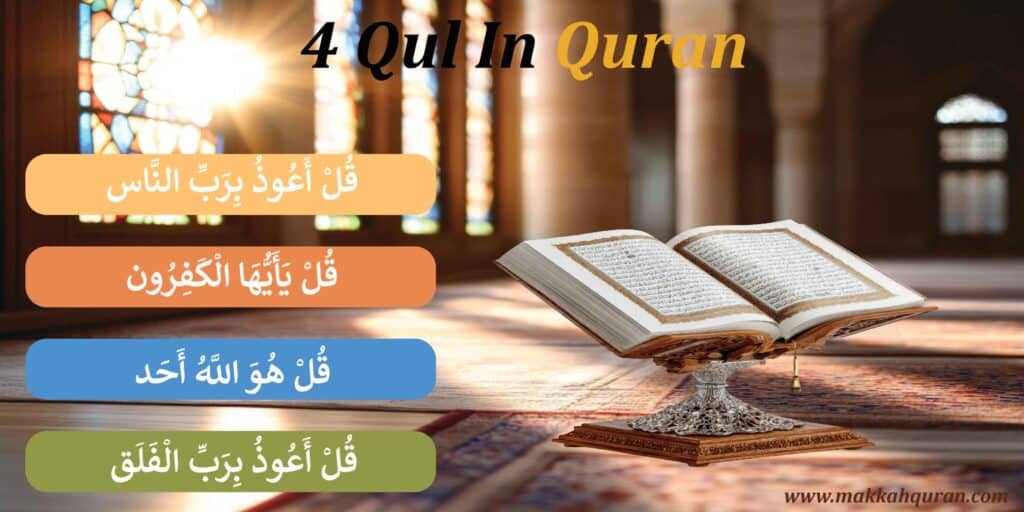
On any good knowledge page, you will notice that these shortest chapters are often chosen first because they are easy yet deeply powerful in everyday Islamic recitation.
The significance of these surahs is not only in their length but in how each divine message conveys faith, Islamic faith, oneness, Allah oneness, and pure monotheism.
Allah is taught directly in Surah Ikhlas, while Surah Al-Kafirun strengthens identity in belief, and Surah Nas with Surah Falaq brings protection and spiritual protection. Because of this, their essential recitations remain part of daily Muslim lives, supporting spiritual, emotional, and well-being through regular recitation.
Many teachers describe these Quran passages as short but carrying immense significance, since 4 to 6 verses can shape personal faith more than longer reading when practiced daily. Each of these sacred chapters offers a direct meaning and helps believers connect with protection through repeated recitations.
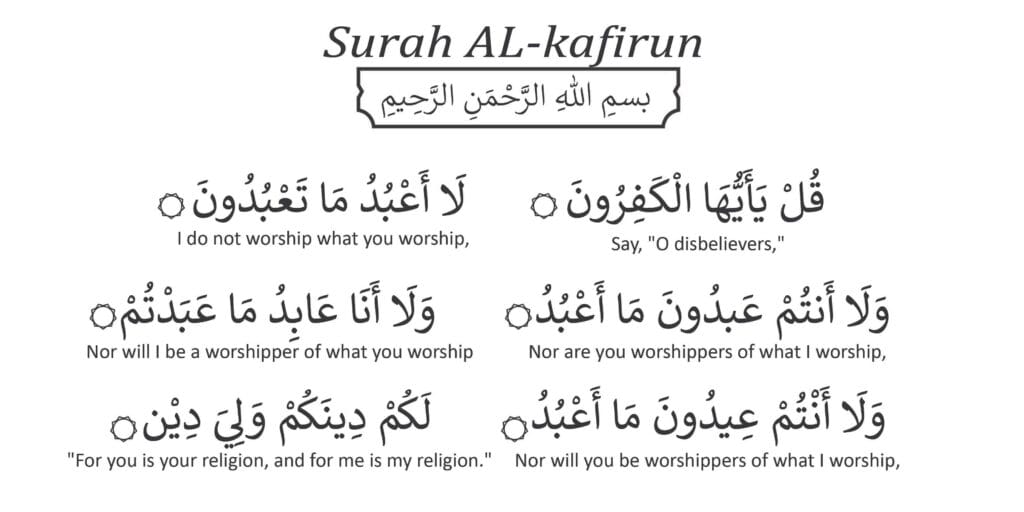
Chapter 109 – Surah Al-Kafirun (The Unbeliever)
In the 109th Surah, Surah Al-Kafirun, the holy Quran gives a strong declaration of unwavering commitment to monotheism, where Muslims are taught to worship only Allah, clearly rejecting idolatry and false deities;
While reading its Arabic text, transliteration, and translation, I often notice how this Quran chapter emphasizes the path of believers, distinguishing them from disbelievers, and showing that this commitment is a direct statement of faith in the holy message of the Arabic text.
Chapter 112 – Surah Al-Ikhlas (The Purity)
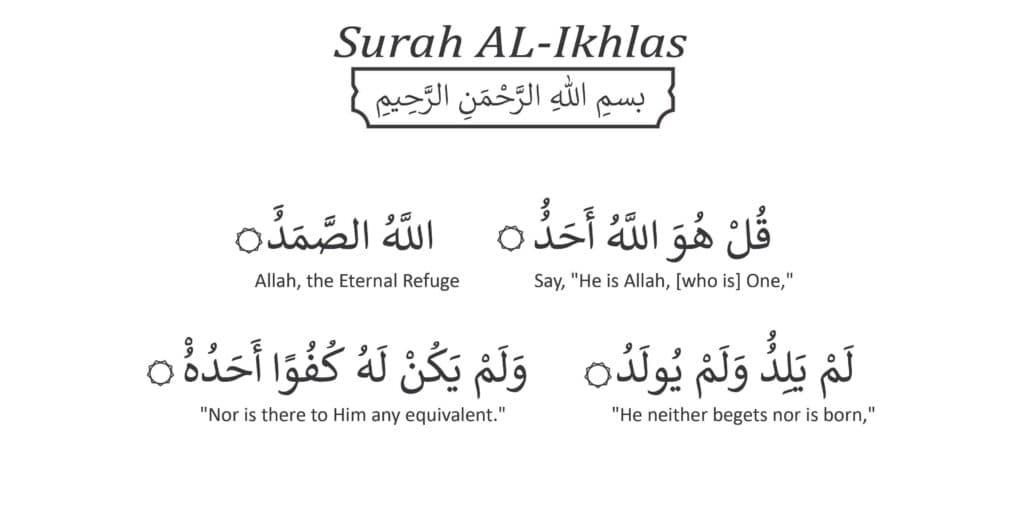
The 2nd Qul, Surah Al-Ikhlas, also known as the 112th Surah of the Quran, is a small yet profoundly meaningful chapter that teaches the essence of Islamic monotheism and the concept of Tawheed.
With only four ayats, this surah is remarkably concise, making its Arabic text, transliteration, and translation easy to memorize while reflecting a pure faith that is without equal.
It declares that Allah is unique, eternal, and the embodiment of oneness of Allah, summarizing the essence of monotheism and faith in a few profound surahs.
Personally, I have always found that reflecting on this shorter yet powerful surah allows one to connect deeply with the eternal being, and its pure message is far-reaching, unlike Kafirun, as it emphasizes the equal focus on devotion to Allah, pure faith, and understanding the oneness that defines Islamic belief.
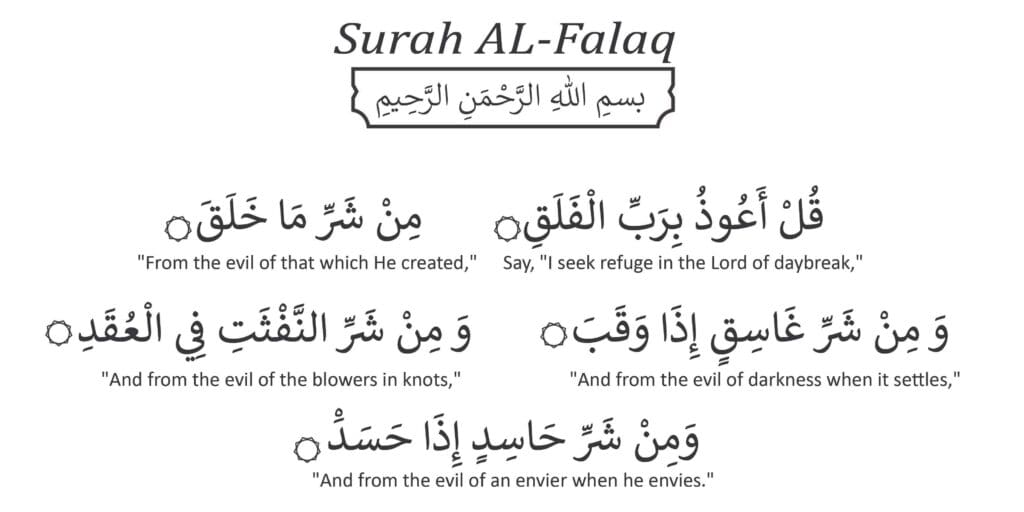
Chapter 113 – Surah Al-Falaq (Dawn)
This surah, with 5 ayats, is known as Al-Falaq, meaning dawn or day-break, and is the second last chapter in the Quran.
Its Arabic text, along with transliteration and translation, guides Muslims to seek refuge in Allah from Shaitan, evil, envy, dark forces, unseen dangers, external harm, and all worldly and supernatural threats.
By reciting this supplication, I personally noticed a sense of calm and confidence, as if every hidden fear was gently kept away, making it a powerful spiritual shield.
Chapter 114 – Surah An-Nas (Mankind)
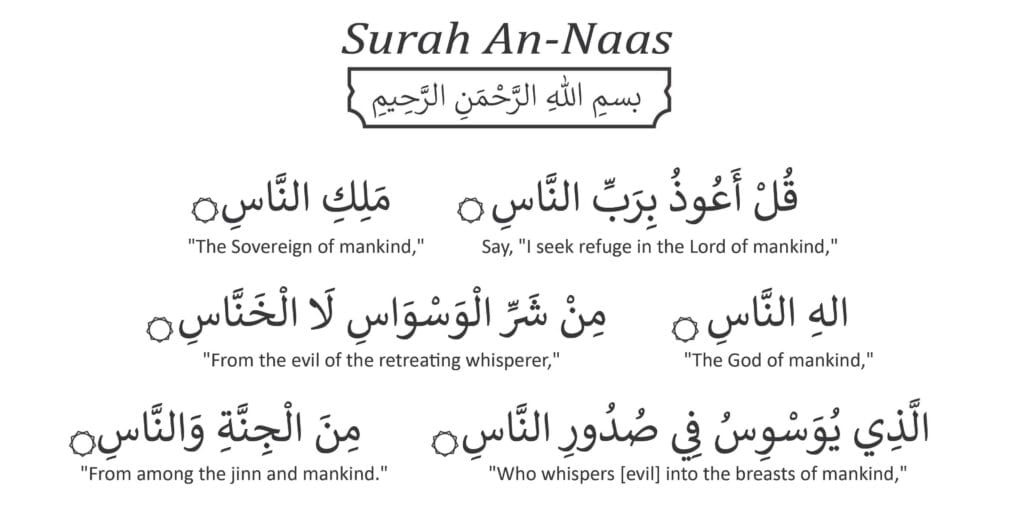
The fourth and last Qul in the Quran is Surah An-Nas, a surah in the chapter of the Qur’an that addresses Mankind. Comprising 6 ayats, this surah provides a powerful plea for divine protection and refuge from internal dangers.
When you read the Arabic text, its transliteration and translation make it clear how seeking shelter from the whispers of Shaytan or Satan can shield your heart and mind from harmful influences.
Alongside Al-Falaq, it’s a reminder that these short, profound prayers are not just words but a personal shield, offering peace and safety when recited sincerely.
Virtues And Benefits According To Hadith
1. Spiritual Protection:
Reciting the Four Quls—Surah Al-Kafiroun, Al-Ikhlas, Surah Falaq, and Nas—regularly in the morning and evening acts as a powerful protective barrier against evil, shirk, Jinn, black magic, and the whispering of shaitan.
These protecting Surahs not only fortify the Muslim’s connection with Allah but also shield both physical, spiritual, and psychological well-being from harmful forces throughout the day.
I have personally noticed how reciting them daily creates a sense of protection and inner calm that is difficult to describe but profoundly reassuring.
2. Mental Calmness and Emotional Support:
Whenever I feel stress or anxiety, I find immense comfort in reciting Surah An-Nas. For Muslims, these surahs act as a refuge from negative thoughts and moments of distress, bringing a sense of peace to the mind.
Personally, I’ve noticed that regular engagement with these protective words strengthens my emotional stability, reminding me, as believers, of Allah’s constant presence and protection.
This practice doesn’t just soothe temporary worries; it reinforces a deeper awareness of divine comfort and peace, making everyday challenges easier to handle.
3. Strengthening Belief in Allah’s Oneness:
Through the regular recitation of Surah Al-Ikhlas, I have personally felt how it strengthens and deepens the belief in the oneness of Allah. This form of devotion, often described as equivalent to one-third of the Quran in meaning, helps remove doubt and purifies faith from any association with false beliefs.
The simple yet profound words of this Surah enhance understanding of Tawheed and bring a sense of clarity and inner peace every time it is recited.
4. Strengthening Sincerity in Daily Life:
When reflecting on the 4 Qul, I often feel how they truly emphasize the importance of sincerity in worship and faith. The Surah Al-Kafirun clearly stresses that Muslims should remain sincere in their devotion to Allah alone, regardless of external pressures.
From my personal experience, keeping this constant reminder in mind helps believers stay firm and true, letting their words and actions align perfectly with pure intention. Practicing this daily makes the heart more focused, calm, and connected to the essence of faith.
5. Gaining Allah’s Mercy and Forgiveness:
When I first truly experienced the impact of consistent recitation of the surahs, especially Surah Al-Ikhlas, I noticed a profound change in my daily worship. By reciting these verses with sincerity, I could feel myself draw closer to Allah, understanding His mercy and forgiveness more deeply.
The message of pure monotheism becomes a central part of a Muslim’s relationship with the Divine, and the immense rewards promised in the Hereafter are a beautiful reminder to seek Him regularly.
This practice is not just a ritual; it’s a frequent, heartfelt means to connect, making part of each day spiritually fulfilling, while the particular focus on the pure essence of faith strengthens both the heart and mind.
The Importance of the 4 Qul in Daily Life
Reciting the 4 Qul surahs has been a source of peace and strength, as I often recited them frequently during prayers and before sleep, especially in quiet moments of seeking protection and divine guidance.
These chapters beautifully reinforce the core Islamic beliefs, acting as spiritual armor that shields one from both physical and metaphysical harm, and their presence in daily routines reminds us of faith and mindfulness throughout the day.
Reinforcing Faith in Tawheed:
For many Muslims, reciting Surah Al-Ikhlas regularly is a simple but powerful way of establishing a strong belief in the oneness of Allah. This short chapter is highly significant because it continues to remind every Muslim of the central tenet of Islam: there is no deity except Allah.
In daily practice, it naturally reinforces faith by teaching Allah’s complete singularity and supremacy, and from my experience, repeating it often helps keep the heart focused on pure Tawheed.
Distinction Between Belief and Disbelief:
In the 4 qul in quran, Surah Al-Kafirun draws a clear line between the path of believers and those who reject faith. This Quranic surah is a direct declaration of independence from all forms of false worship, affirming that Muslims do not compromise in devotion to Allah.
Its message supports monotheism, protects religious identity, and teaches that true worship is based on devotion alone. For a Muslim, this surah strengthens resolve, builds spiritual strength, and helps in maintaining spiritual identity through daily worship practices.
The believers path requires steadfastness, firm Islamic belief, and acceptance of truth over falsehood. This Islamic teaching is also a declaration of faith, shaping personal identity, deepening faith, and reinforcing spiritual resolve against every form of rejection.
Protection from Evil:
In daily life, I have often seen that when Surah Al-Falaq and Surah An-Nas are recited together. These surahs known as the Mu’awwidhat or chapters of refuge give a strong sense of refuge and protection through Allah, especially when a person wants to seek safety from external dangers such as jealousy, black magic, or any harm that may befall them.
What is very particular is that Surah An-Nas focuses on safeguarding the heart and mind from internal whispers and negative thoughts that can lead someone astray, which is why many people turn to these verses regularly for calm and spiritual security.
Hadith on Surah Ikhlas and Kafirun:
In companion narration, Ibn ‘Umar narrated that he watched the Prophet (PBUH) for a month, and noticed a beautiful prophetic practice before Fajr prayer. In the two Rak’ah before Fajr, the Prophet (PBUH) would recite Say, “O you disbelievers from Al-Kafirun (109) and then Allah One from Al-Ikhlas (112)”.
This daily morning prayer pattern shows how one short Surah can prepare the heart for worship, because these verses carry clear tawheed, firm revelation, and a direct message for disbelievers. The report is graded Hasan by Darussalam, with English reference, Vol. 1, Book 5, Hadith 1149, and it remains a strong example of Sunnah connected to the Quran and its practical chapter recitation.
Another hadith presents the same message from a different angle:
“the Prophet (PBUH) asked his companions if it was difficult to recite one-third of the Qur’an in one night. When the companions replied that such power seemed hard, Allah’s Messenger, also described as Allah Apostle, explained that Surat Al-Ikhlas (112.1) until the End is equal to one-third of the Qur’an”.
In my own teaching experience, many learners feel surprised when they discover that “Self-Sufficient Master,” whose creatures need Him, summarizes divine unity so completely. This Reference appears in Sahih al-Bukhari (5015), where night recitation, reward, chapter meaning, revelation, and repeated verses all point back to One central truth: sincere tawheed deepens every act of worship.
Hadith On Surah Nas and Falaq:
In daily practice with the 4 Qul, many Muslims remember the narration of Aisha, “who shared how the Messenger of Allah sent peace and blessings before sleep by making a gentle blow into his hands, then recite the two chapters of refuge, Surah Al-Falaq and Surah An-Nas, before using them to wipe the body for protection at bedtime”.
This Source appears in Sahih Bukhari, 5960, with Grade marked Sahih, meaning authentic, and it also explains that “when he became sick, he would read the Mu’awwidhat, including Surat Al-Falaq and Surat An-Nas, then pass his breath over himself for healing”.
In my own study of these narrations, I noticed how this Sunnah becomes even more meaningful when someone is seriously ill, because the report says two Surahs were read again and the hands would rub gently while hoping for mercy.
Another Reference in Sahih al-Bukhari, 5016, under In-book reference, Book 66, Hadith 38, shows how these verses from the Quran were part of regular care, comfort, and trust in Allah.
How and When to Recite the 4 Qul
The 4 Qul in the Quran can be recited at any time of the day, but many Muslims make it a habit to read them in the morning, evening, and before sleep as part of their regular dhikr and remembrance of Allah.
In many homes, this becomes part of daily routines, especially before embarking on a journey, during difficult situations, or when seeking Allah’s aid for protection, safety, and blessing.
I have often noticed that keeping this daily recitation within prayer and worship helps strengthen faith, increase devotion, and make recitation time feel like a steady spiritual practice rather than only a formal act.
While reciting these surahs, understanding and reflection are strongly encouraged, because this helps a person internalize their powerful meanings and connect with the message more deeply.
The Arabic recitation has great value, yet it is equally beneficial to study translations, tafseer, and different interpretations to grasp the deeper lessons they offer.
This approach improves Quranic meaning, comprehension, learning, explanation, and knowledge, while also building guidance, spiritual reflection, contemplation, insight, and a better connection with the language and teaching found in the study of Quran, making the recitation benefit clear through every layer of meaning.
Start Learning More Surahs of the Holy Quran with Makkah Quran Academy!
After learning the 4 qul in quran and understanding how the four quls protect daily faith, many students naturally want to continue with more surahs of the noble Quran.
In my experience, the best way to continue this Quran learning journey is to start with steady reading, careful recitation, and small goals for memorizing each part of the holy Quran.
At Makkah Quran Academy, we always recommend that beginners register for an online Noorani Qaida, because Noorani Qaida builds strong pronunciation before moving into a full Quran reading course.
This makes it easier to learn, read, and recite the holy book correctly while also building long-term knowledge and enhance knowledge through proper Islamic learning.
For those planning serious memorization, our online Quran Memorization course is designed for kids, adults, and women who want to memorize with daily recitation support from qualified male teachers and female teachers.
Our Quran teachers guide every course in an online format, so home learning becomes easy inside the comfort of homes, with an affordable price that stays affordable for families.
Many learners begin by enrolling, then sign up for a one week trial of free Quran classes, using the trial period to see how regular Quran learning, memorization course practice, and personal correction improve their connection with the Quran before continuing at our academy on a free and flexible schedule.
FAQ’s
What are the 4 Quls of the Quran?
The Four Quls are four short Surah chapters in the Quran that many Muslims recite daily for protection and inner peace. Students quickly remember that surahs. Surah Al-Kafirun and Surah Al-Ikhlas strengthen faith, monotheism, and help a person stay away from shirk.
While Surah Al-Falaq and Surah An-Nas are often read as a refuge from evil, Jinn, black magic, the whispering of shaitan, and other unseen fears.
Each qul has a special role, and regular recitation of these four protecting Surahs gives many people a sense of spiritual safety and helps protect the heart in daily life.
When to read 4 Quls?
According to hadiths, Prophet Muhammad ﷺ would frequently recite the 4 Quls for protection, and many teachers recommend making this a daily habit in the morning, before sleep, and after prayer because these surahs serve as a spiritual shield, offering refuge from physical dangers and spiritual dangers.
In my experience, reading them calmly before sleep and after every prayer creates a strong physical and spiritual shield, giving a sense of refuge from dangers and helping the heart feel protected throughout the day.
Is it good to recite 4 Qul every day?
Reciting the 4 Qul every day can bring immense protection and peace. Prophet Muhammad, peace be upon him, recommended reciting Ayatul Kursi and these chapters after every obligatory prayer.
Many people, including myself, find that when one recites them before going to bed, an angel is appointed to guard throughout the night. The 4 Qul serve as a shield from black, magic, the evil eye, and unseen harm.
It is often recited to strengthen spiritual protection, and as the Prophet said, “whoever makes it a habit will notice calmness and safety each after before moments in daily life”.
Incorporating them into your routine after prayer or before sleep ensures that them have a continuous layer of divine protection throughout the day and night.