
My neighbor Khatija once stopped me in the driveway and asked why my kids no longer went daily to the masjid for Quran.
She pointed at the internet and called it an internet thing, almost like an online cult, because for many generations, traditional classes with real teachers, real classrooms, and direct human interaction were seen as the only safe path for Muslim families.
I understood that feeling because for nearly three years I had the same conviction, until pure desperation pushed me to try something new after two years of evening madrasa routines that left everyone exhausted instead of excited.
What changed my mind was not one perfect result, but a long trial, some error, and avoiding what felt like a learning disaster. In today’s world, digital learning touches every field, from science to art, so Quran education is no exception.
One of the clear benefits of online Quran classes is that online Quran classes connect Muslims across the globe with qualified teachers, structured lessons, and personalized learning while staying in the comfort of their homes.
Unlike many fixed settings in traditional madrasas, digital Quran education offers flexibility, inclusivity, and innovation, which helps both parents and children fit Quran lessons into modern life.
For an adult returning to Quranic studies, or for young students beginning Islamic learning, the learning experience feels more tailored to each lifestyle. Some learners want to memorize, others focus on Quran memorization, and both require utter dedication, a responsible outlook, and clear goals.
In the traditional method, a person often traveled to institutions for a longer period, but with advancements in technology, that traditional setup has partly been replaced by online hifz classes.
This convenience allows learning in own homes, where attendance, discipline, and teacher access can still be maintained through careful planning.
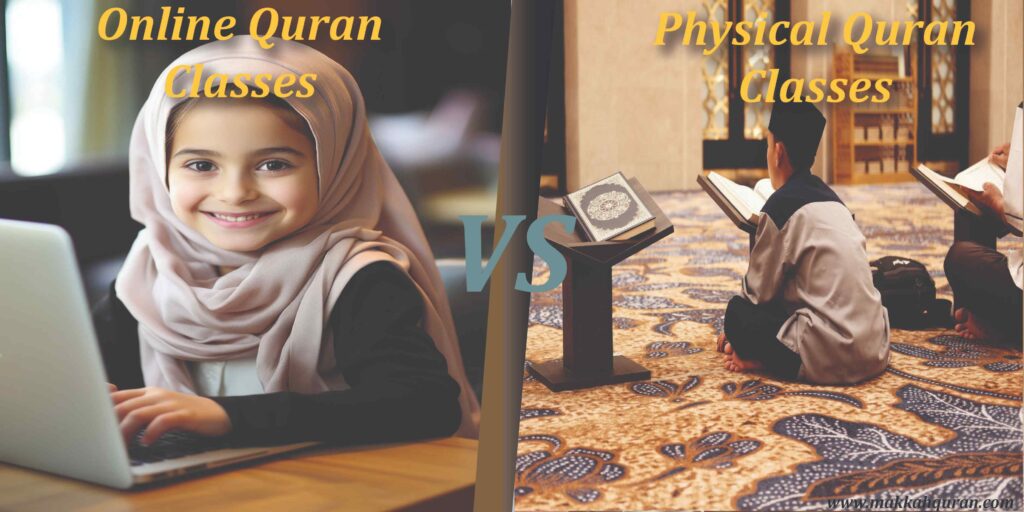
If we compare the difference between physical classes and online classes, each has strengths. A madrasa environment gives community, while home learning supports focus for many learners.
Islamic studies, educational method, learning mode, teaching structure, class system, student routine, accessibility, remote learning, educational transition, modern learning, religious education, and home-based study all matter when choosing what works better.
I was first judged when I switched, then I signed up thinking it felt ridiculous, but once I tried, the time it saved us worked beautifully—especially when watching my children no longer drag through lessons but actually obtain steady progress in digital studies and hifz today as we discuss what suits each family best.
Understanding Both Learning Methods
What Are Traditional Quran Classes?
In traditional Quran classes, the setup is usually simple: kids go to a local masjid, mosque, or madrasa after school or on weekends, where group lessons follow specific and fixed timetables.
These programs have nurtured generations of Muslims, continue to serve an essential role in building community and identity, and for many families they remain a beautiful and effective option.
In one room, eight, twenty, or even thirty children may sit with other students, wait for their turn, and then read in front of the teacher, while traditional madrasas operate in a clear structure that many homes already understand.
From my own years of watching my son, some days were lovely because he came home happy after a few good minutes of direct reading time. On other days, he spent forty-five minutes and got only a three-minute chance, because sharing attention in group learning does naturally require every teacher to divide focus carefully.
It is nobody’s fault—this system works when dedicated teachers manage many students, but limited personalized feedback can happen when many classes run together and everyone has waited patiently for their turn.
What Is Online Quran Learning?
Learning the Quran has transformed in recent years, and Quran learning online has become a popular choice for many families.
Unlike traditional live class settings where children sit at a table with a teacher, online learning allows a qualified teacher or qualified Quran tutor to guide a child or children directly through video call.
The experience is one-on-one, offering real-time interaction that ensures every question is addressed promptly. From my experience observing online sessions, it feels just as personal as sitting in a physical classroom, if not more so, because the focus is solely on the learner’s individual needs and pace.
With online classes through platforms like Makkah Quran Academy, learners enjoy flexibility in class times and daily routines, which is a significant advantage for busy parents, students, and working adults.
Live Quran sessions can be scheduled anytime and any place, eliminating the stress of commuting or missing classes due to family obligations or work commitments. The convenience of studying from home also allows for consistent learning while balancing other responsibilities, making it a highly appealing option in today’s fast-paced world.
Modern online Quran platforms integrate modern learning tools and digital tools like interactive whiteboards, Tajweed correction apps, and progress tracking dashboards. Recorded lessons for review help reinforce comprehension, involvement, and regularity.
Individual attention is easier to maintain than in group sessions, ensuring a personalized experience tailored to each student’s learning style.
In my personal experience, children respond well to this approach because it combines studying with online study support, giving them control over their studies while maintaining accountability through the class management features and monitoring of missed classes.
Using this modern methodology, students not only keep up with their learning but also feel more motivated and engaged. The structured yet flexible approach helps parents and professionals balance their responsibilities while ensuring their children’s education remains consistent and productive.
The combination of qualified tutors, digital tools, and real-time interaction truly bridges the gap between physical classes and online learning, making it a viable and efficient alternative for anyone looking to pursue Quran learning online.
Why More Families Are Choosing Online Programs
Ever since COVID forced a shift in learning, I noticed my kids progressed much faster than I expected. The consistent attention and lack of distractions that come with a masjid classroom meant no more worrying about the kid next to them fidgeting or the long commute after an exhausting school day.
At home, I could peek while folding laundry ten feet away and actually hear my daughter’s Tajweed improving. It’s amazing how children learn effectively with enjoyable lessons, stories, visuals, and games on online platforms, keeping them motivated to train in proper memorization.
Even adults benefit from self-paced lessons that cater to every skill level, whether you’re a complete beginner aiming to perfect recitation skills or someone looking to refine Quran classes.
These online programs let you learn at home, stop worrying about helicopter parent vibes, and feel guilty less about missing a class, making the learning journey smoother, flexible, and highly effective.
The Flexibility Advantage of Online Quran Classes
Learning Around Your Family’s Schedule
In traditional classes, the schedule is usually fixed, with times like 5 or 6 PM when everyone is often hangry and falling apart. If you miss a doctor’s appointment, it can be tough luck, and students fall behind now.
I’ve seen firsthand how stressful this can be for kids and parents trying to manage studies alongside responsibilities. At Makkah Quran Academy, we picked online sessions that actually work for our family.
My son attends at 7 AM before school because he’s weirdly chipper in the morning, and my daughter takes hers at 4 PM after decompression with a snack. The same family now follows totally different schedules, and it’s amazing to see the kids thriving.
The significant flexibility online students get allows them to select times that align with their routines. This adaptability is beneficial for parents, working adults, and children, letting them manage studies alongside other commitments.
There’s no need to worry about missing classes due to obligations, and the convenience of studying at the best time that suits each individual’s needs promotes consistent learning. The added stress of fixed timetables is gone, making online classes an appealing option in today’s fast-paced world.
No More Rushing Between School and Madrasa
I remember the evening rush all too well—it was truly awful trying to pick up kids, race home, shove food in them, change clothes, and get them ready, all while leaving in just a few minutes.
We’d jump back into the car, sit in traffic, sometimes arrive early and wait in the parking lot, or be late and feel guilty. That chaos is something I miss little or bit of, honestly. But now, everything is different—my kids can actually breathe for a second before they log into their class from the dining table.
They’re calmer, more focused, and truly absorbing information without fighting exhaustion like before.
What to Do When Your Child Has Exams or Activities
Last semester, my daughter faced a massive science project that was due the same week as her Quran test, and she completely melted down—a full crying session about not having enough time, disappointing teachers, and failing everything.
With online classes, we simply rescheduled that week, pushed classes back a few days, and she tackled her project before returning to Quran once life calmed down. In traditional classes, you miss, and nobody is rearranging the schedule for a science fair project, making it much harder to balance school work and religious learning.
How Makkah Quran Academy’s Flexible Scheduling Works
At Makkah Quran Academy, the way teachers are available makes learning the Quran simple for everyone. Whether it’s morning, afternoon, evening, or weekends, you can pick what works best for your life.
I’ve personally seen how families adjust when life changes—like a friend’s family who travels constantly for her husband’s job.
Her kids keep the same curriculum by simply logging in from hotel rooms in different cities. Unlike traditional classes, online classes are a blessing for Muslims who reside in non-Muslim countries, because they assure authentic, consistent learning with flexibility to balance worldly goals and spiritual growth.
Whether at dawn before work or late at night after spending time with family, one’s journey with the Quran goes on uninterrupted, giving peace of mind and continuity in education.
Quality of Education: Online vs Traditional
Are Online Teachers Qualified?
Many parents first wonder whether online teachers are simply random people behind webcams, but that concern usually changes after they see how institutes like Makkah Quran Academy select their staff.
In many cases, a teacher holds Ijazah, formal certification, and strong command of Quran recitation and Tajweed, backed by years of teaching and reading Quran since childhood.
What often makes the difference is that online platforms connect students with qualified hafiz teachers, specialists, and top educators from around the world, rather than limiting them to local tutors available in one geographical location.
This creates wider opportunities for learners who want Hifz, better memorization techniques, and clearer Tafsir of quran from teachers with extensive qualifications and proven expertise across various areas of the subject matter.
In many traditional in-person institutions, I have noticed that even a sincere masjid teacher can struggle when handling a large group of children during one session.
Managing thirty students with limited time is a heavy responsibility for any educator, even an experienced one, especially in community programs where resources are often stretched. Because of that, individual attention becomes difficult in a realistic setting, and some questions remain unanswered.
By contrast, online Hifz classes often allow direct access to educators whose global accessibility gives more focused support, deeper correction, and a deeper understanding of difficult lessons for both beginners and advanced learners.
Personalized One-on-One Classes
In physical classes, teachers often handle large classes, so class management becomes the first priority and individual attention can become limited.
I have noticed that even when a teacher tries hard to help everyone, classroom limitation makes it difficult to address the specific needs of individual students at the same moment.
In contrast, online learning creates more room for direct interaction, where tutors can adjust instruction according to a student’s pace, learning styles, and daily progress in the Quran. This creates a more flexible learning experience for learners who need steady guidance and stronger student support.
In online Quran memorization classes, one-on-one learning makes a personalized approach possible because tailored teaching allows tutor guidance to focus on memorization, reading skills, and recitation skills without distraction.
A student usually receives immediate feedback, personalized feedback, and focused attention, which improves understanding, builds confidence, and supports long-term academic progress. This kind of improvement is often easier to notice when the teacher can respond instantly and shape every lesson around one learner’s exact need.
How Online Classes Track Your Child’s Progress
In physical settings like the masjid, many parents only get an annual test result, so there is often zero idea how kids are doing until it feels too late to help. A parent may know that a student attends classes, but not what was covered in each session, what the child nailed, or what still needs more work.
In many hifz schools, teachers must manage large groups of learners simultaneously, and that creates challenges in providing timely feedback.
During classroom recitation, one teacher often moves quickly from one child to another, so some mistakes stay unnoticed, and families remain flying blind about performance, assessment, and academic development.
In contrast, online programs offer a beneficial solution because many sessions feature one-on-one teaching. After every single lesson, a report gives clear information: which specific ayahs were practiced together, where the teacher flagged an issue, and what means of support will enhance learning.
This immediate response allows students to promptly correct errors, improve understanding of the material, and continue with better recitation.
Additionally, digital platforms include progress tracking tools, enabling parents to monitor effectively, access scores, lesson completion rates, and identify areas that require further attention, correction, supervision, individual monitoring, and overall improvement for student development.
Learning Quran With Proper Tajweed
Can Children Truly Master Tajweed Online?
I was a bit skeptical at first about whether my son could really learn Tajweed properly through an online teacher, but the experience turned out shockingly well.
The video and audio quality on the computer screen was good enough for the teacher to hear every subtle nuance of pronunciation, allowing them to catch issues that might go unnoticed in a masjid setting.
For example, my son was saying ح and ه almost identically, but during the first lesson, the teacher spent three weeks specifically fixing just that, something our masjid teacher had never even mentioned in two years.
This approach ensures that everything is addressed step by step, making the online learning environment surprisingly effective for mastering correct Tajweed.
Why Real Teachers Matter More Than Just Apps or Videos
From my experience, online Quran programs can be convenient, especially the pre-recorded videos or apps with automated feedback, but they often miss the personal touch of teaching.
I’ve seen students try learning on their own, like trying to swim by watching YouTube, and technically, information is being transferred, yet many drown in confusion.
At Makkah Quran, live teachers—real humans—respond to each specific child, noticing if a daughter struggles with a particular sound, and the teacher adjusts the entire lesson instantly to help her.
That immediacy and attention make a huge difference, turning what could be passive viewing into effective, interactive learning.
Correcting Mistakes Instantly in Online Learning
In my experience, when a teacher notices a mistake, they don’t wait—they stop my daughter right mid-ayah and guide her to repeat the exact word or phrase five times, ensuring she gets it right there and can continue confidently.
Unlike group classes, where teachers often let minor mistakes slide because constantly stopping can derail everything with many kids reading together, online sessions allow educators to catch, fix, and correct uncorrected errors immediately before they become permanent habits and solidify.
This approach not only improves accuracy but also builds disciplined practice, making learning smoother and more effective than crowded physical classrooms.
Safety and Comfort: Where Your Child Learns Best
Learning Comfortably at Home vs Traveling to Classes
When it comes to learning the Quran, I’ve seen that a friend’s daughter, who is painfully shy, struggles in group classes. She gets anxious when reading in front of other kids, sometimes barely able to whisper.
At home, in her own room, with just the teacher, she reads confidently, asks questions, and really learns without managing social anxiety.
The environment feels safe, secure, and familiar, which removes the worrying about older kids or inappropriate situations, especially during dark, cold winter nights when driving to the masjid can feel risky.
On the other hand, online hifz programs give students the opportunity to learn from the comfort of their homes. Unlike madrasas, which involve traveling, commutes, and crowded settings, online learning is accessible and less stressful.
Parents can monitor their children’s progress, ensuring education is beneficial for girls, younger kids, and anyone who struggles with traditional setups.
It eliminates common challenges like long commutes or stressful group dynamics, letting kids focus on learning in a secure, comfortable environment, while enjoying the experience fully.
What Makes Makkah Quran Academy Different From Other Online Programs
Real-Time Guidance from Teachers
When it comes to learning Quran, students often gain more when they can observe actual instructors who teach in-person rather than just watching recorded video content. Live teachers know each child by name, remember what they struggled with last week, and celebrate their small wins.
I have seen my daughter works extra hard because she genuinely doesn’t want to disappoint Miss Amira. The relationship between teacher and student holds the highest value, and people naturally need to connect with others, because this connection creates motivation that no application can provide.
Dedicated Guidance for Focused Learning
In my experience, having a supervisor who monitors a student’s overall progress can make a huge difference in online Quran classes compared to group settings in physical classes.
Unlike a regular teacher, a separate person often keeps checking regularly, and they even contacted me once when my son seemed consistently distracted during lessons. It turned out he needed glasses to see the screen clearly, and once that was sorted, his focus improved immediately.
This level of individualized attention is hard to achieve in typical group settings, but it ensures each student gets the support they need to truly benefit from the lessons.
Economical and Budget-Friendly
When families compare physical classes with online learning, the first thing they usually notice is the cost comparison. In many madrasas, parents must pay for uniforms, travel, and instructional supplies, along with other extra expenses that may appear during the month.
In contrast, online sessions offer a more cost-effective alternative because many daily costs are reduced or removed. A student only required a device, stable internet or internet access, to participate from home, which also helps in eliminating regular commuting and lowers financial strain.
From what I have seen, this small shift often immediately alleviates parents’ concerns about unexpected fees, especially when more than one child is studying.
Many numerous online platforms, including Makkah Quran, now work as a complete learning platform with affordable subscription plans and flexible subscriptions designed for families who want to save money.
These various packages are tailored to suit different budgets and study requirements, making affordability and budget-friendly learning easier to manage.
Furthermore, resources for revision, practice, and further learning are often available at no cost, and some programs also include revision resources inside device-based learning systems so students keep full access to lessons after class.
Conclusion:
When I compare online and physical quran classes, the real difference often appears during busy evenings, when an exhausted family is trying to help each child and other kids stay focused despite a chaotic routine.
In many homes, traditional systems still have value, especially for those who feel connected to madrassa culture, but minimal visible progress, growing pressure, and even resentment can appear when time is limited.
That is where Makkah Quran becomes a structured, high-quality Islamic education program, reducing chaos, preventing burnout, and making learning less stressing while students keep enjoying lessons.
I have seen how live teaching, qualified instructors, an actual curriculum, and quick action create an unconventional but effective option for parents who want a comfortable way for children to learn, grow, and build genuine love for Allah and His words.
For many families, the best solution is to start today instead of waiting for next week or another six months, because protecting sanity and keeping faith strong matters.
Makkah Quran offers a trial, free consultation, and a one-stop course where students can begin their journey with hifz, memorized lessons, and personalized instruction supported by technology.
This modern approach still respects tradition, answers many traditionalist arguments, and proves that what works is often the first step toward knowledge. With timeless wisdom, flexibility, affordability, and an impressive balance between old and new styles, the future of Quran learning becomes easy to follow.
As mentioned in Sahih Muslim and shared through Sunnah.com, every path taken in search of knowledge is a path toward paradise, and that reminder alone should make every parent ready to thank Allah for any perks that help children move forward with education and love.
FAQ’s
What is the difference between online class and physical class?
Online learning makes Quran study easier for many families because learning happens through the internet in an internet-based environment where remote learning gives flexibility and supports flexible learning with accessibility and accessibility anywhere, so students can join online from anywhere without travel.
At the same time, classroom learning in a physical classroom usually occurs through face-to-face learning, where direct interaction between teacher and student is stronger because physical attendance, regular attendance, and an attendance requirement are part of the system.
In most cases, scheduled classes follow fixed schedules, with set schedules already set, while the physical environment of a classroom often helps students stay more focused during face-to-face lessons.
Which one is better, online or offline classes?
Online quran classes offer unmatched flexibility, letting studentslearn at their own pace. You can join live classes or watch recorded sessions later, which is perfect for those balancing multiple commitments.
On the other hand, physical classes or offline education follow a fixed schedule where learners must be physically present at a set time and place. While schedule-based learning in offline settings helps maintain discipline, the class difference becomes clear when comparing convenience and accessibility.
Attending online education feels modern and adaptable, while traditional physical classes emphasize routine and direct interaction. Whether you attended lessons virtually or in person, both paths support strong quran learning, but the choice depends on your lifestyle, focus, and preference for structured versus flexible sessions.