Article wisdom in this short section of my writing comes from years of reading Tafsir and personal study, where Surah At-Tin always felt great, eloquent, and carrying deep meanings and virtues for man. It begins with three powerful signs—figs, olives, and a phase of years—from which we meditate on the creation of Allah Almighty, indicate His ability, wisdom, and oneness, and build belief and commitment in the common sense that is made in the best form, not formless, as He created him and his nature as a clear calendar of faith.
This explains how the prominent message confirms that most things are invites to reflect and then live a life rooted in purpose, where the Surah confirms what Allah Almighty has made, and we grow through its guidance on life and faith.
Background and Revelation of Surah At-Tin
During the Meccan period, the surah was revealed to the Prophet before his migration, consisting of eight verses that begin with an oath on figs and olives, blessed and useful fruits for humans. The Almighty created man in the best form and condition, as a message to infidels who were denying resurrection after death, reminding them of God’s justice and mercy.
This lesson was repeated for a group of people in the era of the Messenger, Allah, whose peace and blessings be upon him, addressing those who had advanced in age, lost their minds, and apostatized from religion, promising that Allah would restore them from the lowest levels of hell if they believe and do good, assuring a great reward for their faith and actions.
What are the virtues of surah Tin? – Short Answer
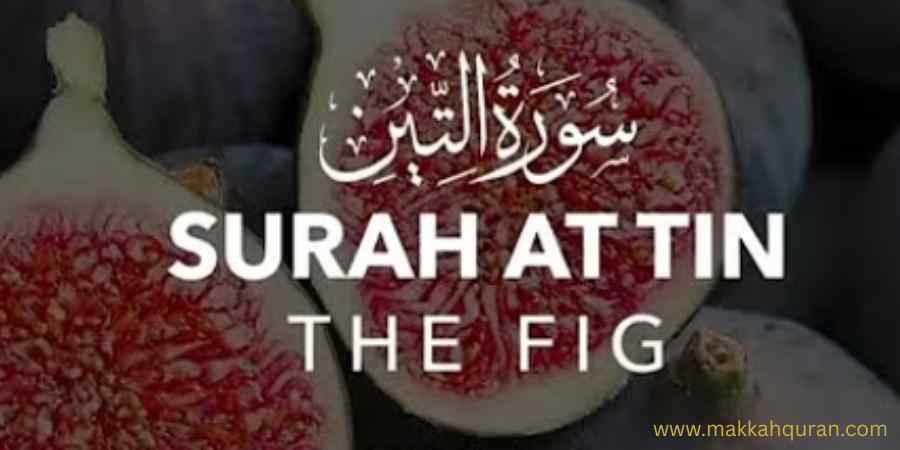
What are the purposes of Surat Al-Tin?
When I reflect on the Holy Qur’an, the Meccan surah At-Tin stands out as a decisive reminder, being the ninety-fifth surah revealed with eight powerful verses. This surah holds many benefits and lessons, and among these purposes are the spiritual guidance, moral upliftment, and reflection on the human condition.
The rank and number of this surah in the Qur’an show its importance, and in addition, every surah carries unique lessons that strengthen faith and understanding. Personally, studying At-Tin has helped me appreciate how surahs can offer benefits that touch both heart and mind.
- Allah Almighty Swore by the Blessed Trees of the Levant
When reflecting on Surah At-Tin, one cannot help but feel a deep connection to the trees that Allah Almighty swore by, which hold a purpose far beyond their mere presence. From my own studies and visits to the Levant, I have seen how the fig and olive branch carry profound significance, linking the birthplace of Jesus Christ in Bethlehem, Palestine to the broader narrative of Adam and mother Eve being sent down from Paradise to the earth.
The verse refers not only to these sacred trees but also evokes the city of Turzita in Jerusalem and the Holy House, reminding us of divine evidence in every corner of creation. Just as Noah released the dove from the ark to travel and confirm the flood, these trees continue to grow and symbolize guidance, hope, and renewal, connecting the master and mother of humanity to a message that repeats again and again throughout history.
- The Blessings of Allah’s Creation and Oath
Reflecting on the blessings of Allah, I often feel amazed at how He has completed His great oath in the Sacred House of Mecca through surah at-tin, the very birthplace of the master of skin, whose prayers continue to inspire humanity. This manifestation of divine care shows how Allah Almighty distinguished man from other beings by granting reason and a creative form in creation, and how He instilled in every soul the nature of faith.
The Creator has bestowed gratitude, exquisite detail, and guidance upon all creatures, and the Qur’anic verses reveal the good character and spiritual characteristics that emerge when care and mercy are extended and even exceeded, showing that divine attention touches every part of life in a way I have personally observed in moments of reflection and prayer.
- Wonder of Human Nature
In reflecting on surah at-tin, I often pause to see how Allah Almighty has created the universe and bestowed every creature with generosity and wisdom, and yet man can sometimes deviate from the path of faith. It amazes me that people with a mind to think and reach pure, emanating faith may still become disbelievers, ignoring the commands of Allah despite all evidence, data, and blessings surrounding them.
There is a subtle secret in human nature, a mystery of how all these things exist with such grandeur, and yet reason and logical understanding often fail to guide man in the matter of adhering to His will. Personally, witnessing moments of gratitude in people reminds me that even a small awareness of His power can reach the heart and realign the nature of people towards faith, showing the delicate balance between how humans are created, blessed, and yet tested by all these realities.
- Understanding Allah’s Perfect Justice
In reflecting on the teachings of Surah At-Tin, I have often felt how Allah’s justice touches every aspect of mankind’s journey, reminding us that every deed, whether good or bad, will be accountable on the day of judgment. It becomes clear that humanity is guided by a faith that nourishes the nature of our hearts when we remain obedient and adheres to Allah’s commands, avoiding prohibitions that lead us astray.
I’ve personally observed that those who abide by His rules avoid the havoc that unchecked desires and sins can wreak on the earth, while those who pollute their hearts by following temptations will inevitably face the consequences, sometimes as severe as hell. Truly, living with this awareness transforms our daily work and strengthens the hope of a blessed abode, where the truth of His guidance becomes a guiding light in life.
Tafsir of Surah At-Tin
Verse 1: “By the fig and the olive”
In this profound verse, Allah begins with an oath by the fig and the olive, highlighting the well-known fruits and their numerous benefits for the body. Scholars have long differed in understanding the meaning, with some saying it refers to the mosques in Damascus and Jerusalem, or to two mountains, or even to the mosques of Nuh, also known as Noah, on Mount Judi and Ilyas. The fig and olive also stand simply as symbols themselves, containing lessons referring to divine guidance and human reflection.
Verse 2: “And Mount Sinai”
Mount Sinai is where Allah spoke to Musa (Moses), bringing peace upon him. This verse contains Allah’s oath, linking the fig and olive of the first verse to the sacred mountain, showing how every detail from Him guides us by faith and reflection, helping us be mindful of His wisdom and purpose.
Verse 3: “And this secure city”
In this verse, Allah makes an oath highlighting the secure city of Makkah, a place so beloved and noble among all lands. I have always felt a deep connection when reflecting on Makkah, understanding the reason behind Allah’s oath—it is because in each of these locations, messengers were sent with divine laws for humanity.
Most of us might overlook how this verse contains guidance, but it beautifully reminds us of the sacredness of a place with profound history, teaching that faith and obedience are intertwined in them. As I personally reflect, it’s inspiring to see how Allah’s message continues for generations, by connecting hearts to the purity and significance of the city.
Verse 4: “Man Created in the Best Form”
When reflecting on this verse, it is truly humbling to realize that Allah has created humans in the best form and state, a design that is both perfect and balanced. I often ponder how every body is endowed with mental and physical faculties, allowing thinking, reasoning, and perceiving the world around us.
The intellect we possess is a gift that merges with our nature, giving us the capability to gain knowledge, develop awareness, and appreciate the divine creation. From personal experience, observing the harmony between our body, mind, and reasoning reminds me that this design is not accidental—it reflects the meticulous care of Allah in crafting life in its most refined form.
Verse 5: “Then we reduced him to the lowest of the low”
When humans disbelieve in Allah and disobey, their arrogance degrades them to the lowest level, making them miserable and farthest from mercy. Such people show pride but fail to become close to His blessings, forgetting the guidance in His creation.
Verse 6: Reward for Believers
Believers who perform righteous deeds will receive a great reward from Allah that never ends, interrupted or exhausted, showing the exception for those whose faith is strong. They learn that this guidance ensures that sincere actions are always valued.
Verse 7: “Why then do you reject the Promise?”
When I reflect on this verse, it really questions the reason behind why so many humans keep denying the religion and the resurrection, despite the clear, undeniable signs and truths present all over the universe. I’ve often thought about how people reject what the Messenger of Allah, peace be upon him, so patiently informed us regarding matters of the unseen.
It’s fascinating to see how the guidance in this verse brings attention to the truths that are visible yet ignored, reminding me personally to reflect on what I accept in my own life and the certainty of what is promised beyond this world.
Verse 8: Reflecting on Allah’s Justice
Allah is the most just judge, guiding all creation with wisdom. Every command has a great and lofty purpose, and everything fits perfectly, even if apparent contradictions appear, showing His perfect justice.
Virtues of Surah At-Tin
Surah At-Tin is a Meccan surah revealed by Allah to His Messenger, peace and prayers be upon Him, in Mecca. It is part of the Surahs Al-Mufassal and is one of the shortest chapters in the Book, containing only eight verses. It is the ninety-fifth surah in the order of surahs of the Noble Qur’an.
This Noble Quran chapter contains immense virtues, wisdom, and admonitions for all believers. Personally, I have always felt a deep sense of certainty and inner peace whenever I recite it.
- Whoever recites Surat At-Tin, Allah will grant him two important qualities: sound health and certainty in worldly life.
- At the time of death, Allah rewards according to the number of people who have recited this Surah.
- Ali was told that reciting Surah At-Tin along with Surah Az-Zaitoun (Olive) is like giving a charity equal to the weight of a mountain of gold for the cause of Allah.
- Allah also records sixty rewards for every verse recited from Surah At-Tin.
Surah At-Tin beautifully mentions the blessed trees, like the fig and the olive, and the mountains of Sinai where the Torah was revealed to Prophet Moses, (PBUH). It also emphasizes the sacred city of Makkah, where the Quran was revealed to Prophet Muhammad, (PBUH). These locations serve as the abodes of divine news and heavenly scriptures.
- This Surah At-Tin reminds us of the honor given to humanity through their creation in the best form.
- It highlights the descent of disobedience to the lowest depths.
- It emphasizes divine justice in rewards for believers and disbelievers.
Reading Surah At-Tin often fills me with reflection about humanity, divine justice, and the blessings Allah bestows on those who maintain faith and recite His words sincerely.
Key Lessons from Surah At-Tin
Surah At-Tin teaches us profound insights about creation, faith, and the responsibilities of man in this world. Reflecting on its verses, one realizes the depth of Allah’s wisdom and the clarity of His message.
- Allah, the Almighty, swore by the fig and the olive, blessed trees in Jerusalem and beyond Hijaz, highlighting the significance of His oath and the beauty of His creation.
- He continued His oath with Mount Tur in Sinai, where Moses, (PBUH), received guidance, reminding us that even the greatest Prophets depended on Allah’s direction.
- The Sacred House in Mecca serves as another symbol of Allah’s power, showing how human creatures can witness His ability to create and protect.
- Man was created with a mind to explain, analyze, and decide between right and wrong, truth and falsehood, good and evil, emphasizing the choice given by Allah to follow faith and monotheism.
- Understanding one’s nature and the potential within every child of Adam is crucial; it enables reason, efforts, and intentions to align with righteous deeds rather than whims or sins.
- Even though man can be destroyed by sinful behavior, water and dust remind us of our humble origins and final refuge before Allah.
- Those who preserve faith, perform righteous deeds, and seek Allah’s face and satisfaction are promised gardens of bliss, pleasant shelter, and an unrivaled place in the Hereafter.
- Allah is often astonished by people who lie or disregard religion, despite knowing His power, blessings, and creative universe.
- He is the simplest yet most decisive ruler, establishing justice, bond, and judgment. On the Day of Resurrection, scales will weigh truth and falsehood; those heavy with truth enter Paradise, while those weighed with falsehood face the Fire or evil destination.
- The honour of Prophets and Messengers is evident in their lives and deaths, as mentioned in the Quran, immortalized until the end of time.
- Eesa, Ibrahim, Nuh, Musa, and Muhammad, all alive or returned, were given miraculous birth, healing cures for the blind and leper, and even the power to revive the dead.
- Their achievements, such as rebuilding the Ka’aba, surviving burning, constructing the Ark, and parting the Red Sea, remind us that Allah honors those who act according to His commandments.
- Symbols like Masjid Judi, Bayt al-Maqdis, safe town, and Makkah represent the legacy of these Ulul-Adham, showing how their statement and lives inspire human beings to reach their finest potential.
- Man is gifted free will to decide between good and evil, yet sinful choices and disobeying Allah lead to humiliation in this life and the next.
- The forelock, or frontal cortex, reminds us that the executive center of our brain controls decisions, which can lead to being held among the lowest or guided by Ar-Rahman, the Most Merciful, and Arhamar Raahimeen, who gives slaves a chance to believe, act with unfailing efforts, and maintain proper intentions and actions.
- Finally, trusting God as the decisive judge ensures that every deed is recognized and rewarded, making the lessons of Surah At-Tin not just theoretical but practical in daily life.
Summary of Surat Al-Tin
Surah At-Tin is a Meccan surah with eight verses, revealed in Mecca after Surat Al-Buruj and before Surat Al-Quraysh. The date of its revelation is linked to significant events like the migration of the Companions to Abyssinia and the Isra of the Messenger to Jerusalem, which makes its topic all the more profound.
The main and fundamental benefits of this noble surah lie in its message about the correct and sound nature that Allah Almighty has placed in all servants since birth.
Reflecting on its verses, Allah Almighty confirms and clarifies this truth through examples like the fig, the olive, and Tur Sinin, highlighting a trustworthy country and divine blessings. The surah is named after its first verse, and many meanings have been given to the concept of figs and olives.
Some say they represent two mountains in the Levant, while others see them as two fruits familiar in our lives. Allah Almighty used the method of division to show how these trees enjoy their rich benefits and possess many good things, with characteristics that give fruit and lessons for human conduct.
FAQ’s
What is the main message of Surah at-Tin?
When I reflect on Surah At-Tin, it serves as a gentle reminder of the inherent value and dignity of human beings, emphasizing the responsibility we carry to uphold faith and good deeds. The verses call individuals to appreciate their divine blessings and live in alignment with the examples set by the prophets, showing certainty in Allah’s justice. Experiencing this personally,
I’ve found that recognizing these truths encourages one to act with integrity and mindfulness, understanding that our deeds truly reflect the divine guidance in everyday life.
What is the lesson learned from surah At-tin?
When I reflect on Surah At-Tin, I realize it teaches us to truly believe in Allah and the Prophets He has referred to, guiding us in how we should do good deeds with sincere faith. Life constantly reminds me that all we need is to work on ourselves, giving our best in every action, knowing that Allah promises an unfailing reward for those who follow what He wants and what the Prophets have shown.
We have the opportunity to do good, and the effort we put in as individuals truly matters in shaping our inner peace and purpose