
Every language has its own distinct form and structure, with definite rules, instructions, and guidelines that shape its usage. The same applies to the Divine Language of the Holy Quran.
While human forms of speech across the world may differ in many respects due to restrictedness to specific regions, they still share common grammatical systems like taking breaks between sentences.
In the same way, the Quran has clear principles that guide the reader in reciting, reading, writing, and even understanding its communication and sacred lingo in the most correct mode.
From my experience in teaching recitation, I have seen how ignoring proper stop and pause signs can affect the meaning of a verse.
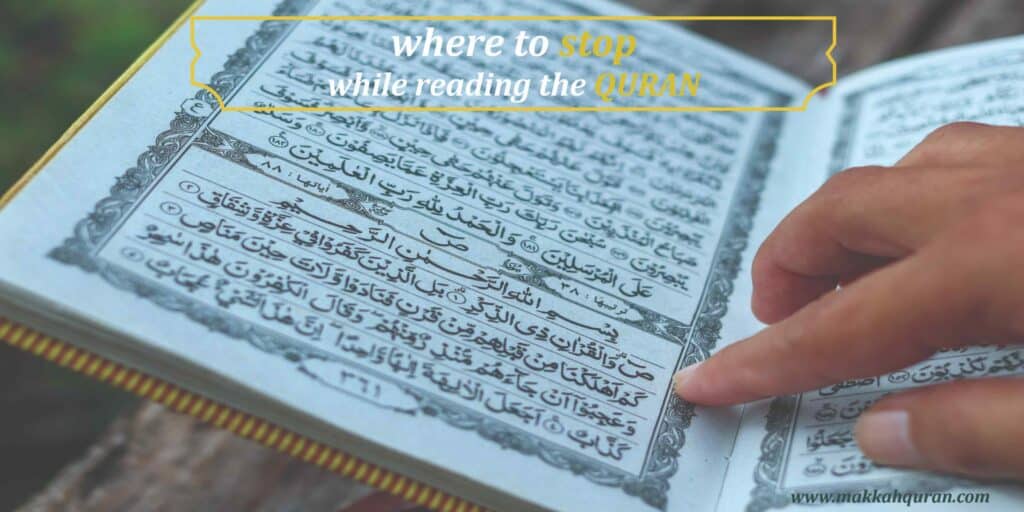
The Quranic clauses are wisely gapped, making dividing a longer conversation into shorter fragments both necessary and helpful to comprehend the message in a rightful manner.
To truly learn to recite with Tajweed, focusing on pronunciation, rhythmic, and phonetic style is essential.
The concept of Waqf, which means stopping in Arabic, teaches when to continue and when stopping is required to avoid misunderstanding or placing a stoping at the wrong place.
Allah commands in Surah AL-Muzzammil 73:4 “to recite with measured recition”, reminding us that the quran is the word of Allah, revealed to Prophet Muhammad PBUH with precision and beauty. A careless waqf can change the message and even make it inappropriate, as seen in the verse containing
إن الله لا يستحيي أن يضرب مثلاً,
where stopping incorrectly outrageously changes the understanding. This is why Stopping works like a manual or guide, offering a clear, concise explanation with practical examples to define the concept and help us grasp what is truly intended.
In every field of knowledge, a proper set of rules must be followed to ensure proper practice. The same applies to reciting the Holy text as it was revealed.
The science of Tajweed, deeply rooted in tradition, provides a nuanced approach, ensuring accurate pronouncing of words, maintaining fluency, and supporting deep comprehension of the verses.
These various signs indicate when to pause or move forward, making respectful engagement with the Scripture an integral and fundamental part of spiritual practice.
Through consistent learning and careful understanding, the reader can maintain accurate recitation and truly understand the powerful message of this Highly Revered book.
What is Waqf (Stopping) in the Quran?
When we talk about Waqf (وقف), we are talking about stopping and pausing while reading the Quran in a way that helps us maintain the correct meaning of the verses. Many people focus only on finishing a verse, but the real skill is to know where to stop, where to take a short pause, and where to continue.
The Arabic word for this is waqf, and it comes with specific signs and symbols that guide the reader. These rules are concerned with protecting the meanings of the Quranic text, because Without proper stopping, the meaning can change.
From my experience teaching an online course, I have seen that students who acquire this knowledge and understand these certain symbols quickly improve their recitation. When reciting, you may stop completely, take a short pause, or even make a long break to take a breath before resuming.
You can apply this at the end or even in the middle of a verse, but you cannot stop in the middle of a word. For example, in the verse:
(ختامه مسكۚ وفي ذلك فليتنافس المتنافسون)
there is a sign following the word مسك which guides you whether to continue or pause.
Learning these rules is essential if you want to recite the quran beautifully and gain a better understanding. A detailed account with more examples always helps in mastering the right time to pause during recitation.
Common mistakes in stopping and how to avoid them?
From my experience teaching Tajweed, I’ve seen that many people focus only on recitation flow but forget where to stop. The most frequent issue actually starts with ignoring the signs and stopping arbitrarily, which later leads to deeper mistakes.
These common errors often create misunderstanding in an ayah, especially when someone stops at the wrong place, causing an unintended change or even altering the meaning completely. Learning the difference between مـ (must stop) and ج (can stop) is essential if you truly want to avoid distorting the message.
Another subtle problem I often correct is related to pausing—some students pause too long, while others pause not enough, especially at saktah marks like ص and sakt signs such as س.
These pauses are delicate; they are not full stops, but they are not meant to be rushed either. Understanding these rules carefully helps preserve the true meaning of each ayah and protects you from repeating the same mistakes again. first or second pause, ensuring nothing is missed in recitation.
1. – The Conclusion of Verse:
When reading the Quran, one of the most important pauses is at the Waqf e Taam, which marks the finishing or end of a specific verse in the Furqan e Hameed. You will often see it represented as a circle at the conclusion of a Quranic line, signaling the reciter to stop and take a breath before continuing the reading.
This pause ensures the deliverance of the message in that sentence, allowing the narrator to look back, grasp the gist, and learn from the following lines.
From my experience, identifying the easiest and clearest stop sign in a Quranic verse makes reflection and pondering over the meaning much smoother, helping you truly read and understand the sacred text deeply.
2. مـ – The Compulsory Stop:
When reading the Quran, understanding the signs that guide a reciter is crucial. One of the most important markers is مـ, which signals an obligatory stop. This sign is found on the top of a word or verse, such as in 36 of Surah Al-An’am, where it appears above يسمعون and before والموتى.
The Qari must take a pause here, as failing to stop can radically alter the meaning of the sentence or ayah. Every point, word, and sequence in tajweed is placed with precision to ensure that the recitation does not differ from the intended message.
In my experience, recognizing this mandatory pause comes with practice. The reader must observe the placement of Lazim or laazim-stop, understanding that it is required and imperative. Ignoring it can change the entire meaning-alter, as seen in
لَعَنَهُ اللهۘ وَقَالَ لَأَتَّخِذَنَّ مِنْ عِبَادِكَ نَصِيبَاً مَفْرُوضَاً.
The first case is often challenging, but once found and respected, it guides the reciter to deliver the example properly, honoring the rules and spirit of the Quran.
3. ط – The Absolute Pause:
This stop sign tells the reader to take a natural breath and create a small gap in the flow of reciting, especially during a long passage, so the recitation does not feel rushed.
It allows one to discontinue for an instantaneous period of time, making the reading process much easier.
Personally, I’ve found that following this pause lets me fully absorb the meaning of the text I just read, helping in grabbing its essence rather than just moving mechanically through the words.
Using this technique improves both the rhythm and understanding, making the Quran more engaging and reflective.
4. ج – The Permissible Stop:
When reading the Quran, you may encounter the symbol of the letter Jeem, which indicates a Waqf e Jaaiz, also known as Waqf Ja’iz / وقف جائز. This sign allows the reader the choice to stop or continue reciting without one being more preferred than the other.
I remember when I first noticed this symbol while studying the Quran, I paused to absorb the meaning of the previous part of the Ayah and felt ready to know the new matter in the following fragment of the same verse.
This permissible stop is not obligatory, but it helps the Qari understand the completion of the matter discussed. In verses like
أَوَلَمْ يَرَوا إِلَى الطَّيْرِ فَوْقَهُمْ صَافَّاتٍ وَيَقْبِضْنَۚ مَا يُمْسِكُهُنَّ إِلَّا الرَّحْمَن,
and in
إلا ما شاء الله إنه,
the sign includes guidance on when you may stop after الله, giving you more clarity while reciting the Quran. Following these rules ensures a smooth and meaningful recitation, letting you reflect on each verse while respecting the intended pauses.
5. ز – Continue Reading:
When you encounter the symbol ز while reading the Quran, it indicates Waqf Mujawwaz, meaning it is permissible to continue without a pause, though a brief stop or pause is not prohibited.
In my experience, understanding this sign helps maintain the natural flow of recitation while respecting the rules of tajweed, pronunciation, and elongation.
This process allows the recital to be uninterrupted, yet it is necessary to know that a permitted pause can be taken if required by context or personal understanding.
Following this sequence, one can interpret the verse or ayah with proper clarity and emphasis, balancing the continuation of reading without pause and the guidance provided by contextually and semantically correct recitation.
It ensures the meaning of the Quran is preserved, maintaining both process and reverence while stopping only when allowed or recommended.
6. ص – The Licensed Pause:
When reciting the Quran, there are moments when it’s perfectly fine to pause, but only in the right way. The Licensed Pause, or waqf e murakh-khas, is a special symbol that permits the reader to take a short break and catch a breath if feeling tired.
From my experience, it’s highly advisable to carry on reading unless genuine exhaustion occurs. This type of pause is not used freely like other kinds of pauses; it is specifically meant for cases where a break is needed.
What this means is that if no such need is found, the Qari should continue reciting without interruption, maintaining the flow and respect of the Quranic verses.
7. صلي – Preference for Continuation:
When learning the rules of stopping in the Quran, one important sign is Al-wasl Awlaa, which refers to an optional pause but shows that it is preferable to continue the recitation instead of making a full stop.
In my experience teaching Quran reciting, many students first think every mark means they must stop, but this type of Waqf called Hassan simply presents a situation where continuing the verses gives a smoother flow.
A clear example can be found in Surah Al-Fajr, verse 17, where the two words between (كلا بل) appear, showing this case of continuation. Another example appears in the verse:
(الذِي خَلَقَ سَبْعَ سَمَاوَاتٍ طِبَاقَاً ۖ مَا تَرَى فِي خَلْقِ الرَّحْمَنِ مِنْ تَفَاوُت),
where the reader may pause but there is no strong need, so it is better to read the rest of the verses while reciting with proper flow.
8. ق – Better not to Stop:
When learning recitation, I often remind students that some sign marks in the Quran guide the reading of verses carefully.
One of these is Qeela ‘Alayhil-Waqf, which shows that it is better not to stop during the flow of the recitation, although there are differing opinions on whether to stop or continue.
The sign Qeela Alayhil-Waqf is placed on the verses that scholars discussed, meaning there are opinions about pausing, but the preferred approach in recitation is usually not to stop while reading the verses.
9. صل – The Permissible Pause:
While reading the Quran, sometimes you reach a mark called Qad Yusal. This sign specifies that you may continue your recitation although a stop is also possible here.
From my experience teaching Quran recitation, many students ask about this symbol because they are unsure of what they should do at that point.
The answer is simple: one has the permission to keep reading without stopping, but pausing is not wrong either, as the mark mainly guides the flow rather than strictly forcing a stop.
10. قف – The Anticipation Mark:
When learning the rules of stopping in Quran, one sign that many students notice is Qif. The symbol قف is inserted in a sentence to guide the reader or Qari when a stop sign may not immediately appear obvious.
The word carries the meaning of stop and indicates a pause at a place where someone might expect that a pause sign is not necessary, yet the reciter should stop briefly before continuing.
From my experience teaching recitation, this small sign often helps a reader recognize where a thoughtful pause is helpful even when the flow of the sentence might make them continue immediately.
11. س – The Silence Symbol:
When reading the Quran, it is important for a reader to understand the signs that guide proper pauses, and one of these is the Saktah.
This symbol tells the reciter to briefly stop and take a pause, yet not too long, so that one remains able to catch their breath and continue reciting smoothly.
In my experience, while reading verses like those in Surah Al-Qalam, the situation demands careful attention to each verse, and observing this sign allows the reciter to respect the rhythm of the words, whether it is بل or ران.
The purposes of such stopping signs are not just to pause but to maintain the flow, ensuring that continuing the reading feels natural and connected.
12. وقفتہ – The Longer Pause:
When reading the Quran, I have learned that knowing where to stop can deeply affect the flow and understanding of the verses. A Waqfah is a longer pause than a Saktah, and it does not require breaking your breath completely.
The letters and symbols in the text, like the Anticipation Mark, are used to signal these pauses so the sentence remains clear without obstructing its meaning.
By looking closely, I was able to recognize that the Arabic word وقفة indicates a moment where taking a brief break is allowed but the gist of the sentence stays intact.
I found that understanding these marks helps maintain reading rhythm and ensures you use one pause at the right place, because some stops are not optional.
Earlier, I struggled, but now, following these signs makes me completely aware of where you will need to pause, how one stop with care keeps the meaning intact, and that careful attention to the text is crucial.
13. لا – No Need of Stopping:
When reading the Quran, one of the key rules to keep in mind is understanding the symbol لا, which signals No need to stop.
As a Qari with experience in recitation, I have learned that this symbol is prohibited for pausing, meaning the reader should not pause or discontinue the reading here, as doing so could change the meaning of the verse.
This often appears in Quranic lines with a Circle Mark of conclusion, reminding us that the word لا is part of the verse, not a cue to stop.
For example, in verse 32 of Surah Al-Nahl, after طيبين, the sign لا appears, so the recitation should continue smoothly. Skipping or pausing at such points risks altering the Quranic meaning, as seen in
(الّذَينَ يُنفِقُونَ أَمْوَالَهُمْ فِي سَبِيلِ اللهِ ثُمَّ لَا يُتْبِعُونَ مَا أَنفَقُوا مَنَّاً وَلَا أَذَىۙ لَهُمْ أَجْرُهُمْ عِندَ رَبِّهِمْ وَلَا َخَوْفٌ عَلَيْهِمْ وَلَا هُمْ يَحْزَنُون)
Following this guidance ensures that each verse retains its true meaning, and the reader maintains correct recitation without unnecessary pause or stop.
14. ك – Similar Meaning as Previous Sign:
When reading the Quran, you will notice symbols that guide your pauses, and Kadhaalik is one that carries a like connotation to the same action as the preceding symbol.
In my experience, recognizing that suggested pause and understanding how it applies helps maintain fluency and respect for the text. By following the rules carefully, whether or not you have seen a similar sign before, you learn as you go to stop correctly and connect the verses meaningfully.
15. ∴ – The Embracing Stop:
When learning the Quran, one important method I’ve found helpful is understanding the Embracing Stop or Mu’aanaqah. This sign appears in a verse to guide Qari on stopping at specific words without causing discontinuation in meaning.
For example, in Surah Al-Baqarah, at the beginning of the chapter, above
ذَٰلِكَ الْكِتَابُ لَا رَيْبَ فِيهِ هُدًى لِّلْمُتَّقِينَ
there is a triplet that shows it is permissible to pause after the first word or continue and stop after the second, but one cannot stop at both simultaneously.
This sign is mentioned twice in single form and placed on top of certain words, making it clear that either one word can be chosen while reciting, and it is allowed to continue reading without breaking the flow.
I personally notice that once you get used to spotting the Embracing Stop, reciting becomes smoother, and the meaning remains intact, giving a sense of rhythm and mindfulness in every verse.
16. وقف النبی – The Pause of Prophet PBUH:
When learning the Quran, I’ve found that understanding Waqf-un-Nabi helps immensely in reading smoothly and with reflection.
This pause marks where the Messenger ﷺ of God himself stopped and took a moment, teaching us that reciting is more than just reading words; it is about living the sayings and actions of the Prophet Muhammad PBUH in our daily lives.
Muslims are encouraged to follow these pauses, even though a clear sign is not always visible. Paying attention ensures the pause is observed correctly, especially at meaningful points, like at the end of verses such as
يا حسرة على العباد.
Personally, I feel that integrating these pauses into my recitation turns each session from a routine into a mindful reflection, making reciting the Quran no longer an exception but a heartfelt practice.
17. وقف غفران – The Sign of Supplication:
When reading the Quran, one important sign to recognize is Waqf e Ghufraan, a symbol indicating a place where both the recite and listener should stop for prayer and to connect with Allah SWT.
I have personally noticed that pausing at this example not only respects the Prophetic tradition but also aligns with the manner of reciting that the Prophet taught, allowing time to follow the path of reflection.
These pauses give space for engaging, reflecting on the meaning of the verses, and understanding the sign of supplication as an interaction between the Qari and the audience.
At this moment, it is essential to take a deep breath, seek forgiveness, and immerse in the spiritual essence of the Quran, which makes the recitation more heartfelt and impactful.
18. وقف منزل – The Pause Sign of Jibrael A.S:
While reading the Quran, I have always paid close attention to the Waqf Manzil, a sign indicating the presence of Angel Jibrael stopping and taking a pause during the revealing of Quranic Instructions to the Holy Prophet ﷺ.
These signs and symbols are carefully used throughout the Quran to guide us on the significance and meaning of where to pause.
The last type of pause related to Jibrael refers to the pauses made as he revealed the words of Allah to Muhammad PBUH, with each designated stop known to help maintain proper understanding and recitation.
Personally, I find that respecting these stops not only improves clarity but also deepens my connection with the text and its divine guidance.
Significance of Stop Signs in Quran
When reading the Quran, understanding where to stop and pause is essential to maintain the intended meaning of the verses. Proper recitation depends not only on fluency in Arabic but also on the guidance provided by Tafseer, reading rules, and scholarly guidance.
Every stop in the recitation flow is more than a simple break; it is a moment to ensure the message, clarity, and accuracy of the textual meaning are preserved.
By controlling your breathing, applying tajweed, and being mindful of pronunciation, the reader can prevent altering the semantic and context of the Quranic expression.
Importance of Stop Signs in Quran
The Quran stopping symbols act like traffic signs, guiding the reader on when stopping is mandatory, optional, or prohibited. These signs help maintain semantic integrity, preserve meanings, and prevent meaning alteration.
When I first learned to recite, I noticed that following these stop signs made recitation easier and more controlled, allowing me to resume naturally without losing the intended message. Using verbal pauses correctly improves comprehension and strengthens the linguistic connection to each word, verse, and message.
By respecting these stop signs, a reader can avoid incomplete meaning or false meaning. For example, incomplete meaning occurs if one stops after رَبّ in the verse
الْحَمْدُ لِلهِ رَبِّ العَالَمِين
which delivers only a partial message and requires continuation. Similarly, a false meaning arises if one stops after
فَأَكَلَهُ in وَتَرَكْنَا يُوسُفَ عِندَ مَتَاعِنَا فَأَكَلَهُ الذِّئْبُ
suggesting that Prophet Yusuf actually ate the goods, whereas the intended meaning is that his brothers claimed he was eaten by a wolf, showing how a radical change can occur without proper guidance.
Learning to recite with attention to stop signs, control, and preservation transforms reading Quranic verses into an experience that honors the language, expression, and message.
Every word, every pause, and every verbal stop carries weight, making Quranic recitation a precise balance of knowledge, comprehension, and semantic preservation.
Conclusion
When reading the Quran, it is essential to understand the symbols and pauses that guide where to stop and resume in recitation. Following proper Tajweedrules ensures that each meaning is accurately delivered as revealed by Prophet Muhammad PBUH, which deepens your connection with the divine message.
Over the years, I have seen learners, both kids and adults, benefit greatly from structured Quranic recitation, especially when taught by native Arabmale and female instructors who provide proper guidance.
By enrolling in courses like Online Tajweed classes or at Makkah Quran Academy, students equip themselves with knowledge, skills, and learning to improve, enhance, and master their reading.
It is crucial to consider every point carefully and avoid errors, while equally recognizing criticalstops where a similarchange in recitation can alter meanings.
A comprehensive approach that deepens your understanding of Qira’at, Islamic knowledge, and Islamic studies will make recitation not only accurate but spiritually fulfilling.
FAQ’s
What are the rules for stopping in the Quran?
When learning the rules of stopping in Quran, many students ask where to stop while reading Quran so the meaning stays clear. One important rule is Waqf e Taam, which indicates the finishing end of a specific verse in Furqan e Hameed.
Scholars often call it the Perfect Stop because the meaning of the ayah is complete. In the Mushaf, this sign is usually shown as a small circle placed at the conclusion of a Quranic line.
When a reciter reaches this mark, it is recommended to stop, take a breath, and then begin continuing the reading further in the Quran without affecting the meaning of the verse.
What does Quran 47.4 say?
While studying the Quran and especially a Quran verse like Surah Muhammad, verse 47:4, I often remind students that correct pauses help us understand the command, instruction, directive, and ruling with clarity.
The verse describes a battle, a war, or intense combat situation where believers meet and encounter unbelievers during a conflict, instructing them to smite the necks until the enemy is crushed, then bind the captives or prisoners firmly;
Thereafter believers are entitled to set them free, release them as an act of grace and mercy, or arrange a ransom exchange against them until the war ends, showing the clear authority and guidance contained in verse 47:4.
What is the verse 8.37 in the Quran?
When teaching students where to pause during recitation, I often reflect on how Allah explains deeper meanings in the Quran, such as in verse 8:37, which shows how He will distinguish the good from the wicked.
The verse describes how some of the wicked will be gathered with others, then placed and put together in a way that they are heaped before being sent to Hell.
While guiding learners on stopping points, I remind them that understanding the meaning behind a verse helps decide where to pause so the message about Allah separating the good and the wicked remains clear and powerful during recitation.
What does Quran 14/42 say?
Quran 14:42 from Surah Ibrahim, which reminds us that Allah is never unaware of the actions of wrongdoers.
The verse carries a deep meaning and serves as a powerful warning that although punishment may appear delayed, Allah only delays it until the Day of Judgment.
On that day, people will face the terrifying consequences of their deeds, when their eyes will stare in horror during the severe reckoning.
The verse is emphasizing that temporary prosperity is only a respite, not forgiveness, and eventually justice will prevail through divine accountability.
What is the correct way to read the Quran?
When I sit down for reading the Quran, I always make sure to place it properly on my lap or on a front surface rather than the floor, because it deserves respect and care.
One should never wipe the slate or Quran pages with spittle, instead, if any marks remain, it is best to wash them carefully with water,
Being mindful not to putting the water where unclean substances or Najaasat exist, or where people walk, as this can disrespect the sacred text.
These simple steps, like ensuring the place is clean and the Quran is handled with care, help create a calm and focused environment for recitation.
From my own experience, these small acts make reading feel more connected and peaceful, reminding us that even 22 small rules of etiquette matter in preserving the sanctity of the Quran.